
Our Process Us
Our Process
STUDIO309 follows a phased design approach to guide projects through a structured sequence of thinking, testing, refinement, coordination, and decision making before major commitments are made.
Each phase builds on the one before it ensuring decisions are made at the right time, with full consideration for function, experience, cost, coordination, long-term performance, and a clear understanding of how each choice affects the whole.
A strong project is not built from isolated decisions.
Layout, light, materiality, acoustics, millwork, circulation, views, proportion, privacy, budget, and constructibility all influence one another. When these decisions are made separately, the result can feel fragmented, even when each individual choice is well considered.
The phased process protects the integrity of the project by giving each layer of the work a proper place, and helps reduce rushed decisions, avoid costly rework, improve coordination, and protect the design intent through construction. The outcome is a project that feels more resolved, more cohesive, and more aligned with the people it is designed to support.
the process protects the work
Design is shaped through many connected decisions: site, light, layout, proportion, material, movement, budget, coordination, and construction. When those decisions happen out of sequence, projects become reactive. Details are chosen before the space is understood. Costs are committed before priorities are clear. The result may be complete, but it often feels unresolved. Studio309 follows an architectural process, built to bring clarity to complex spatial decisions before they become difficult or costly to change.
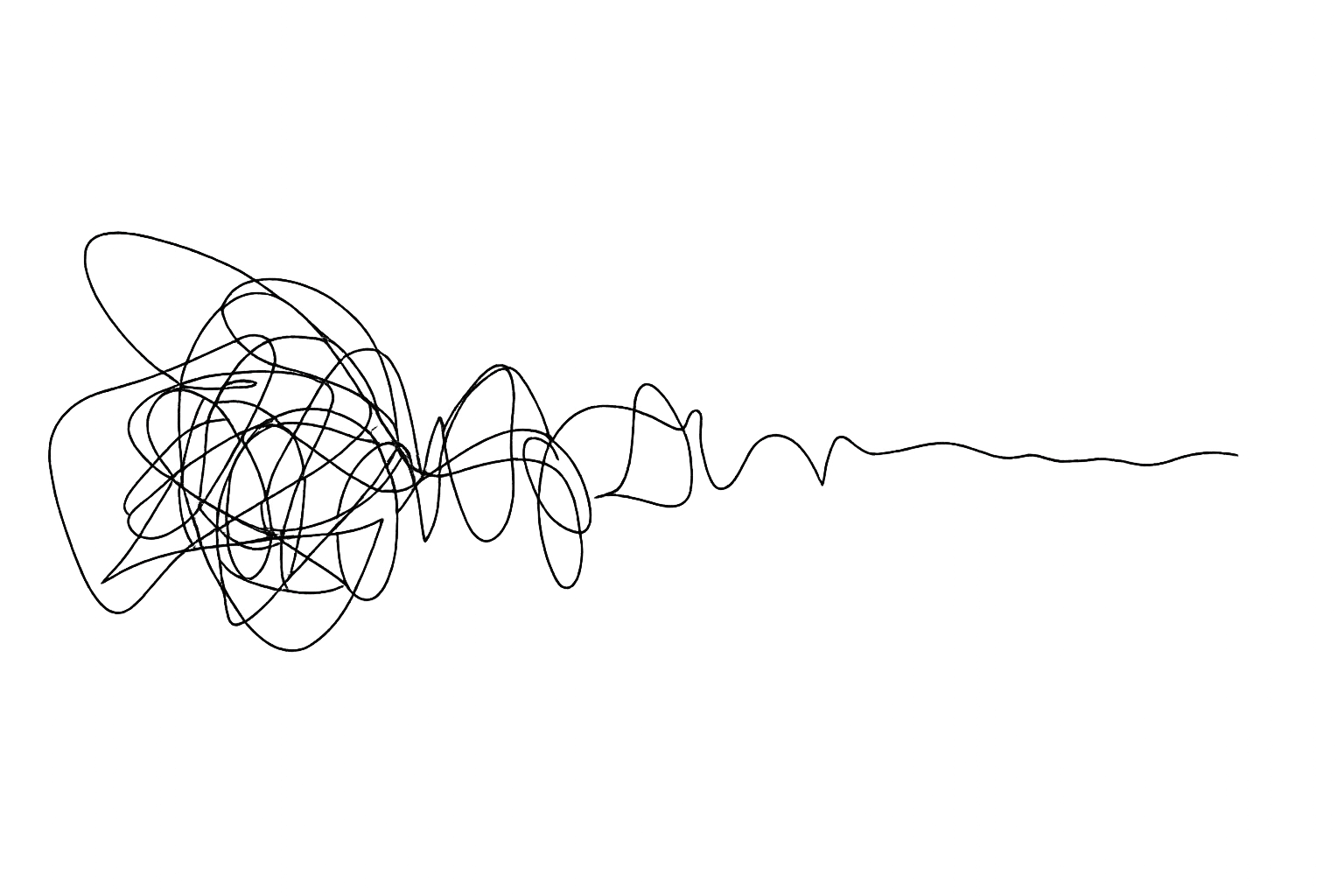
Early phases clarify the project goals, site conditions, functional needs, spatial opportunities, constraints, risks, + overall direction
Middle phases test + refine the design through spatial relationships, material direction, lighting, millwork, furnishings, sensory experience, + technical coordination
Later phases translate the design into documentation + specifications for consultant coordination, contractor communication, pricing support, + construction
Design Process
Every project follows a seven-phase design process. The process begins with Phase 1 and progresses sequentially, moving from site understanding and spatial strategy through to design development, documentation, coordination, and construction support.
Depending on the scope and level of support required, a project may conclude before all seven phases are complete, but phases are not skipped. The examples below illustrate the complete process.
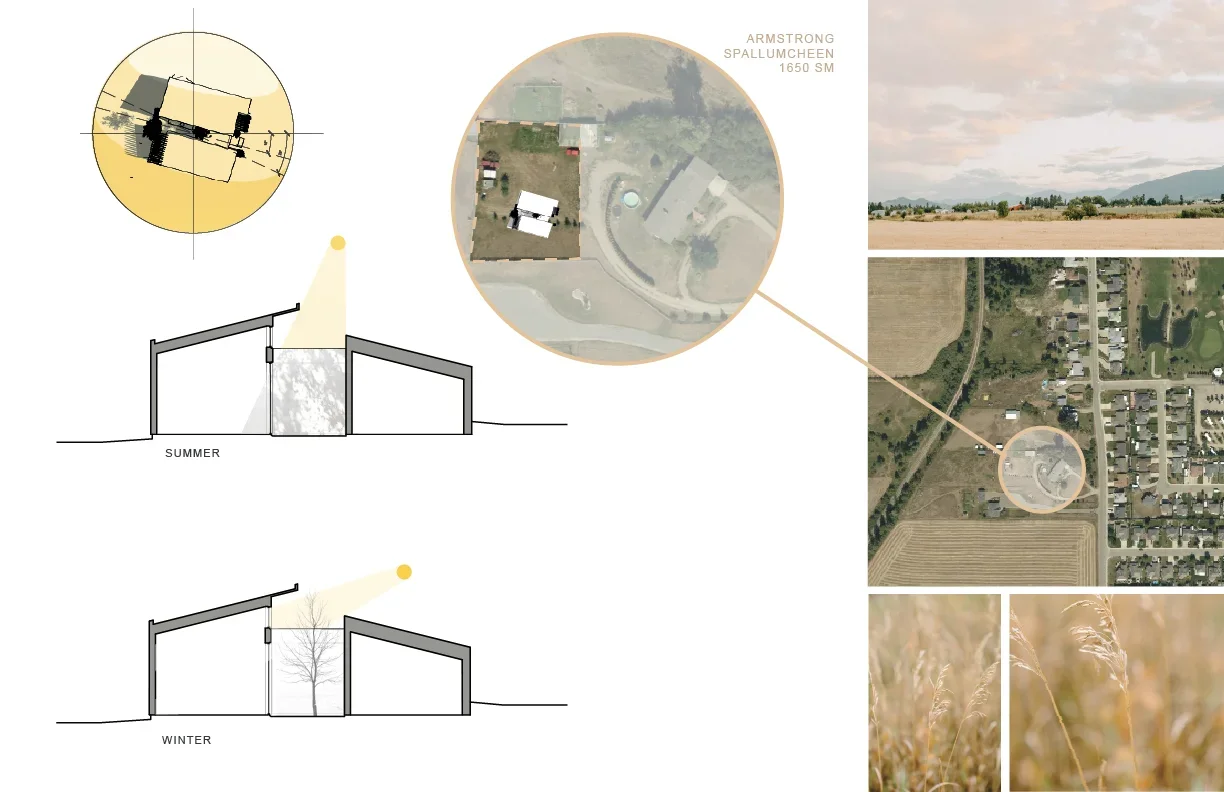
01 Pre Design
The first phase establishes the conditions the project must respond to before design begins. We review the site, existing information, constraints, opportunities, priorities, timelines, and any specialists or technical requirements the project calls for. This helps clarify what is known, what still needs to be confirmed, and what may affect the direction of the project.
This includes both practical considerations such as access, servicing, zoning, and orientation, and experiential ones such as light, outlook, shelter, and arrival. How the space will feel to inhabit as seasons, light, and daily rhythms shift matters just as much as how it functions.
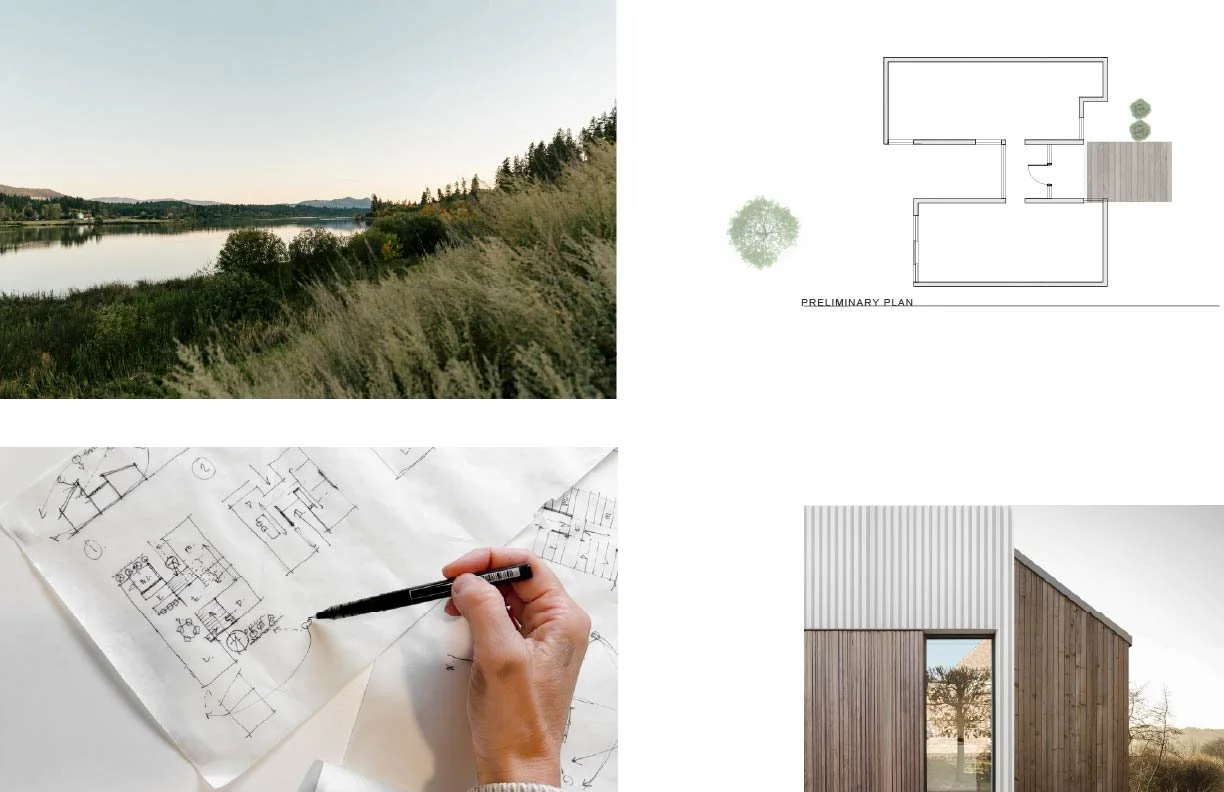
02 Programming + Preliminary Design
This phase translates the project goals into a clear spatial strategy. We define what spaces are required, how they relate to one another, how people will move through them, and how the interior connects to light, landscape, and the surrounding natural context. This is where function, flow, priorities, and daily use are organised before commitments are made. The goal is a strong framework that allows the project to develop with clarity and intention from the start.
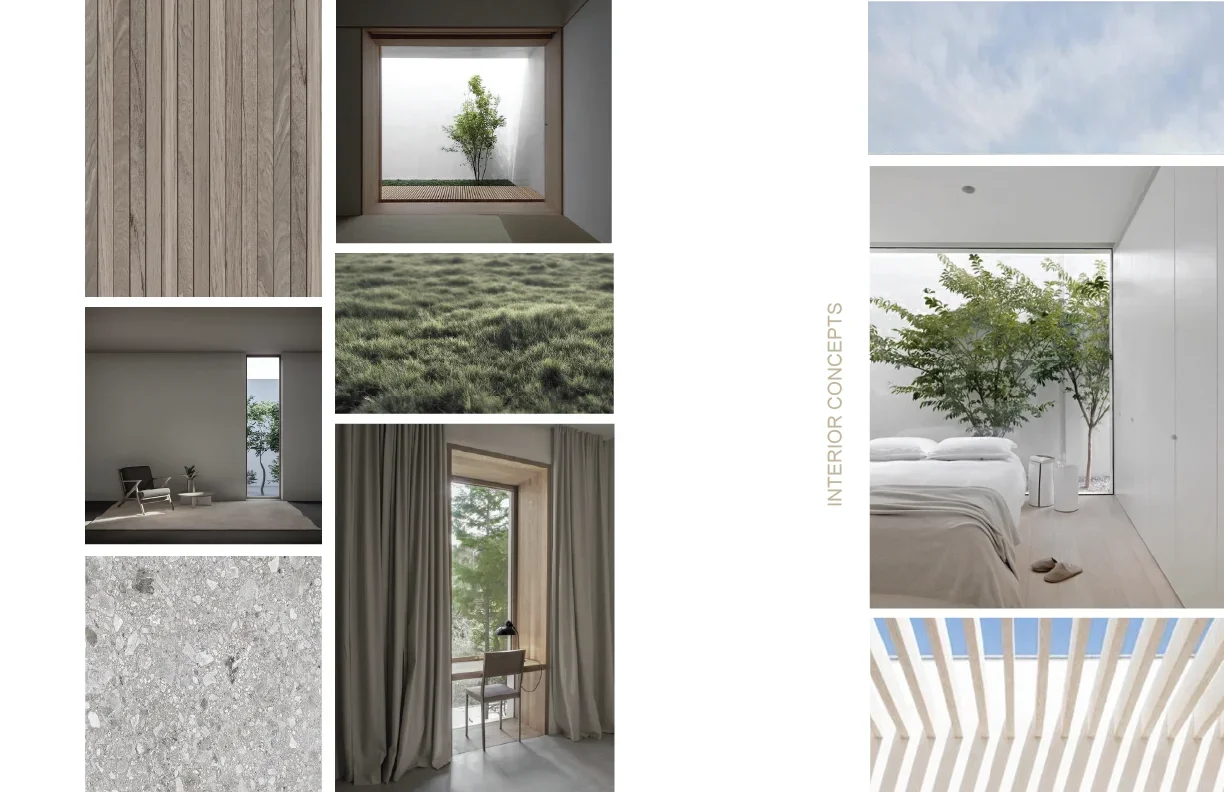
03 Concept Development
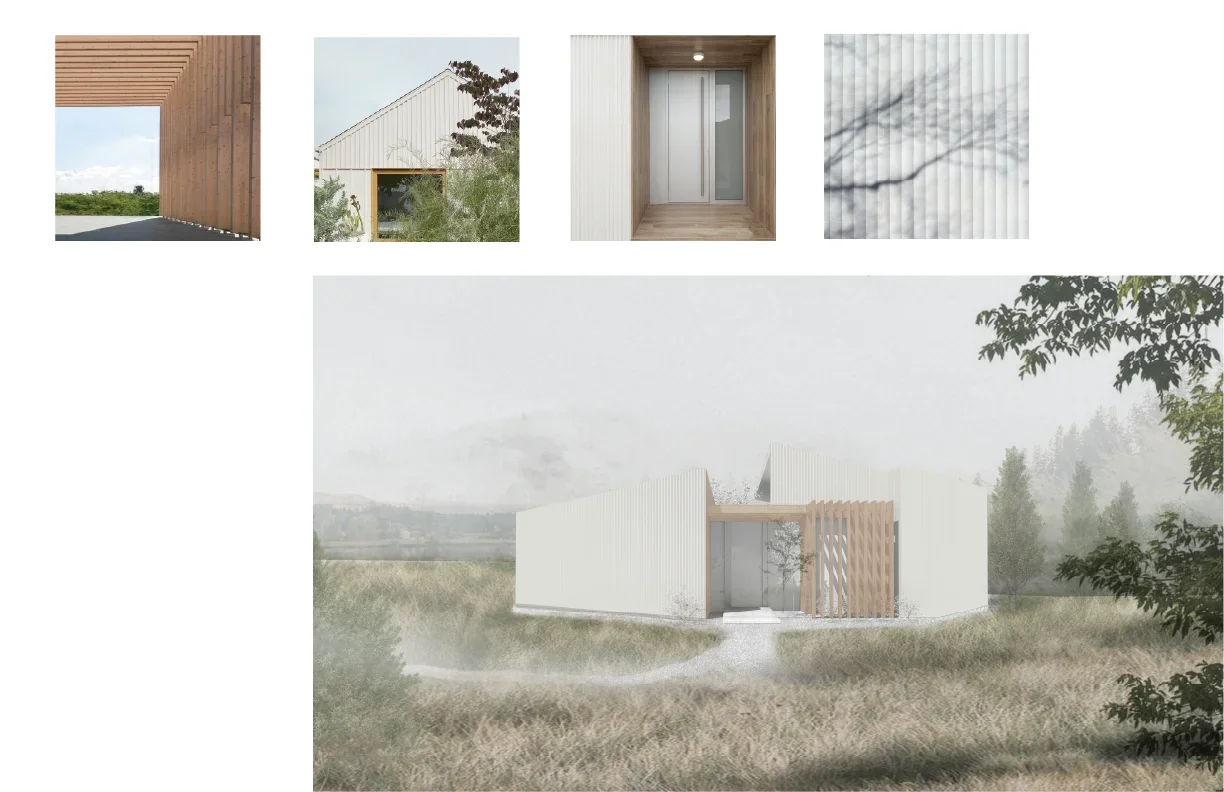
Concept Development establishes the overall design direction. This is where the project begins to take shape through form, atmosphere, material direction, spatial qualities, and the emotional tone of the environment. We consider how the space should feel to inhabit: open or sheltered, quiet or active, grounded or light, social or restorative, and how nature, light, material texture, and connection to the outdoors inform those qualities. These intentions are aligned with architectural form, material strategy, proportion, and movement. This concept becomes the reference everything else is measured against.
04 Schematic Design
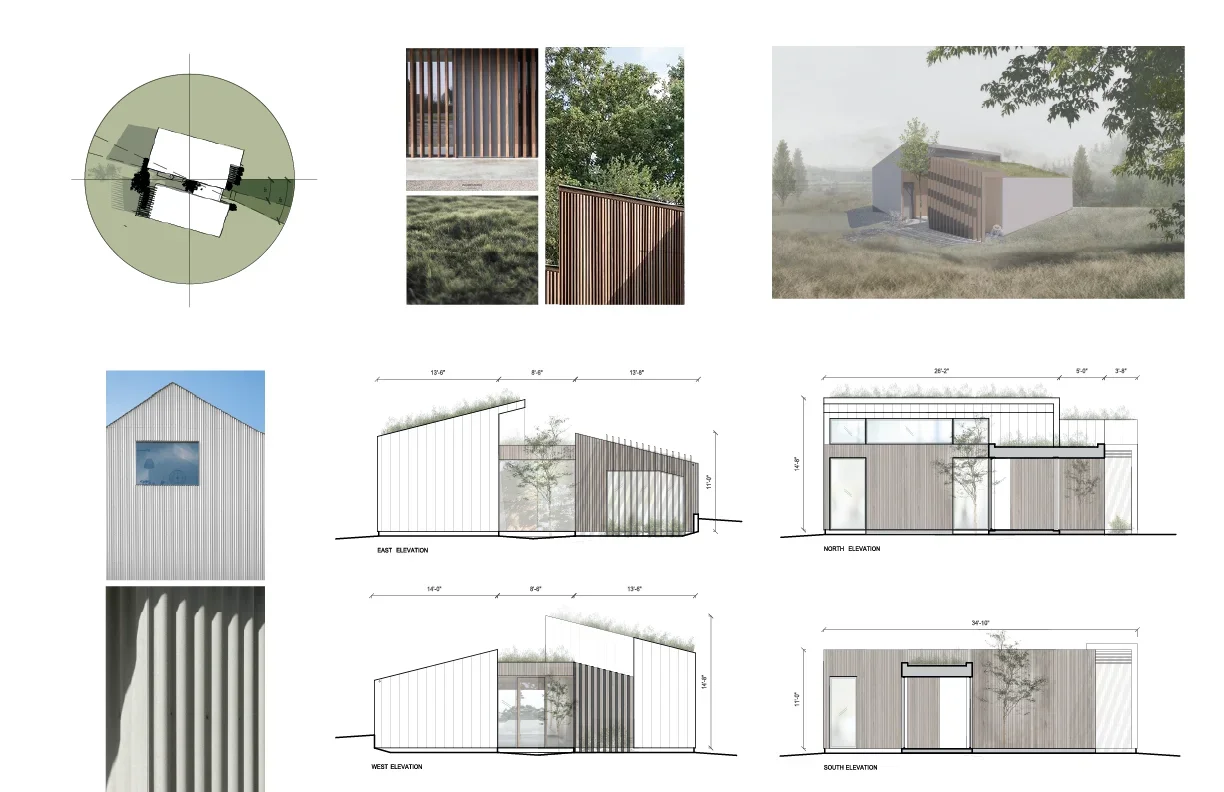
Schematic Design develops the approved concept into a more coordinated design framework. Plans, elevations, key sections, spatial relationships, preliminary material direction, lighting strategy, and technical coordination begin to take shape. This is where design intent must become clear enough to be reviewed, priced, and coordinated. We refine the relationship between experience and constructibility so design quality is preserved as technical demands enter the picture.
05 Design Development
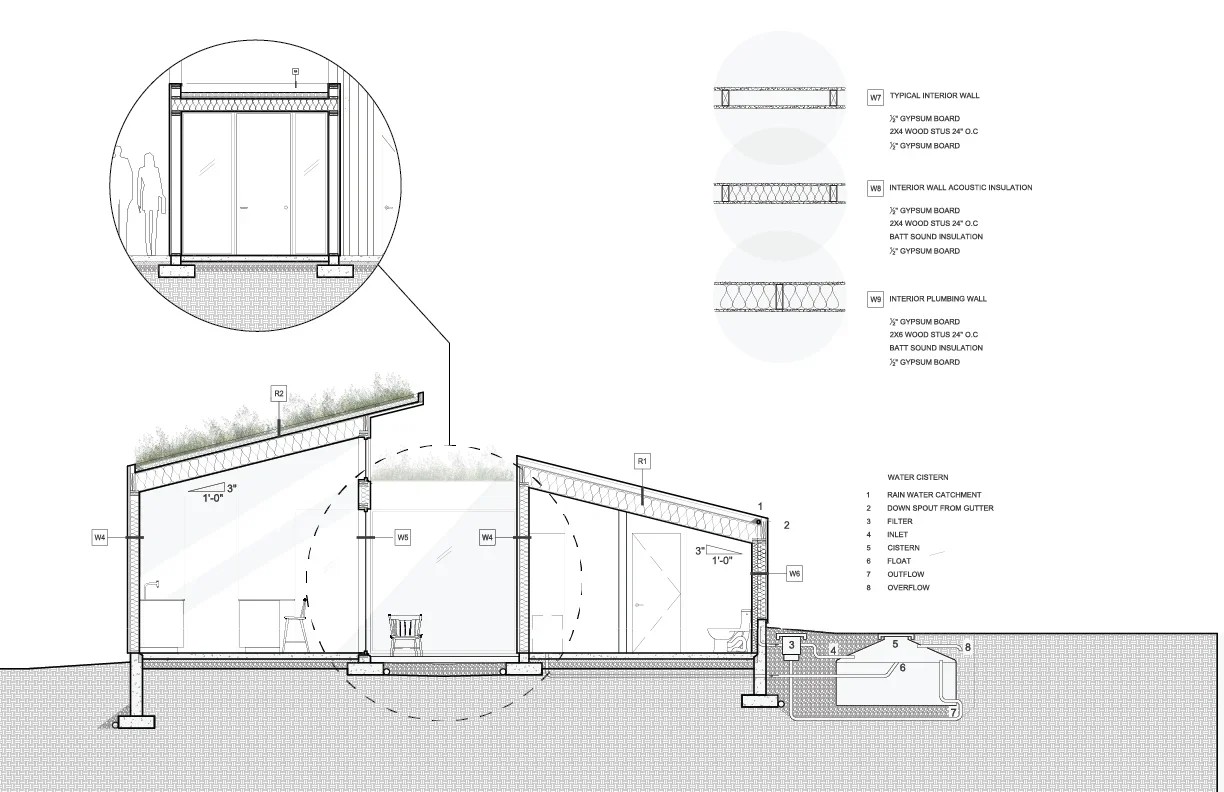
Design Development advances the schematic design into a more resolved and coordinated project. Materials, finishes, assemblies, interior elevations, key details, lighting, millwork, and technical requirements are developed with greater precision. This phase removes uncertainty before costs are committed. Decisions made earlier are tested against durability, maintenance, budget, coordination, and long-term use, so the project can move forward with confidence rather than assumption.
06 Construction Documentation
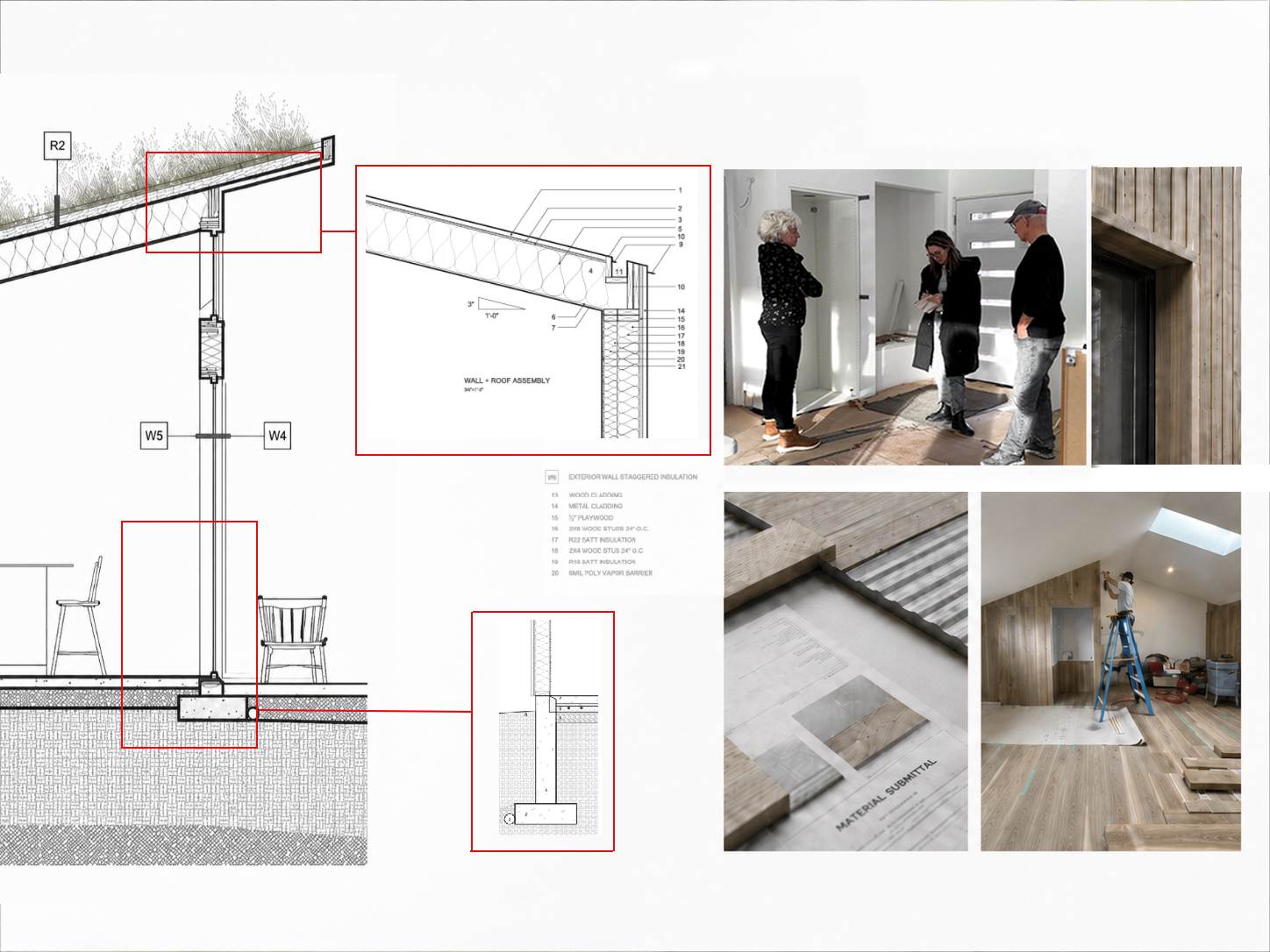
Construction Documentation translates the resolved design into the complete instructions for how the project will be built: drawings, schedules, details, and specifications. This phase is focused on clarity. It defines how materials are applied, how elements meet, how built components are coordinated, and how design intent carries through into construction. Precise documentation means less guesswork on site and better protection of the design you approved.
07 Construction Administration
During construction, STUDIO309 remains engaged to ensure the project is carried out in alignment with the design documentation. This may include reviewing site progress, responding to contractor questions, reviewing shop drawings or material submittals, clarifying design intent, and addressing site conditions that require design input. Construction is where design decisions are either protected or lost. This phase maintains continuity between everything decided during design and what is finally built. The spaces we create continue to shape how people move, gather, work, rest, and recover, shaped as much by nature as by intention, long after construction is complete. A strong process protects that outcome by making the right decisions early, clearly, and in the right order.